


Silicone Rubber Keypad Manufacturer Guide: OEM/ODM Production
- What Are Keypad Manufacturers?
- Top Silicone Rubber Keypad Manufacturers Around the World
- 1. Epec Engineered Technologies (Epectec) — United States.
- 2. Keyflex — Australia.
- 3. Silicone Dynamics — United States.
- 4. Mekoprint A/S — Denmark.
- 5. APEM Group — France.
- 6. Xiamen Better Silicone Rubber Co., Ltd — China.
- 7. Silicone Technology Corp (SiTech) — United States.
- Popular Silicone Rubber Keypad Products Today
- Criteria for Choosing a Silicone Rubber Keypad Manufacturer Worldwide
- Technical Specifications for Manufacturing Silicone Rubber Keypads
- Notes When Placing OEM/ODM Orders for Custom Silicone Keypads
- Custom Silicone Keypad OEM/ODM at Minh Fast
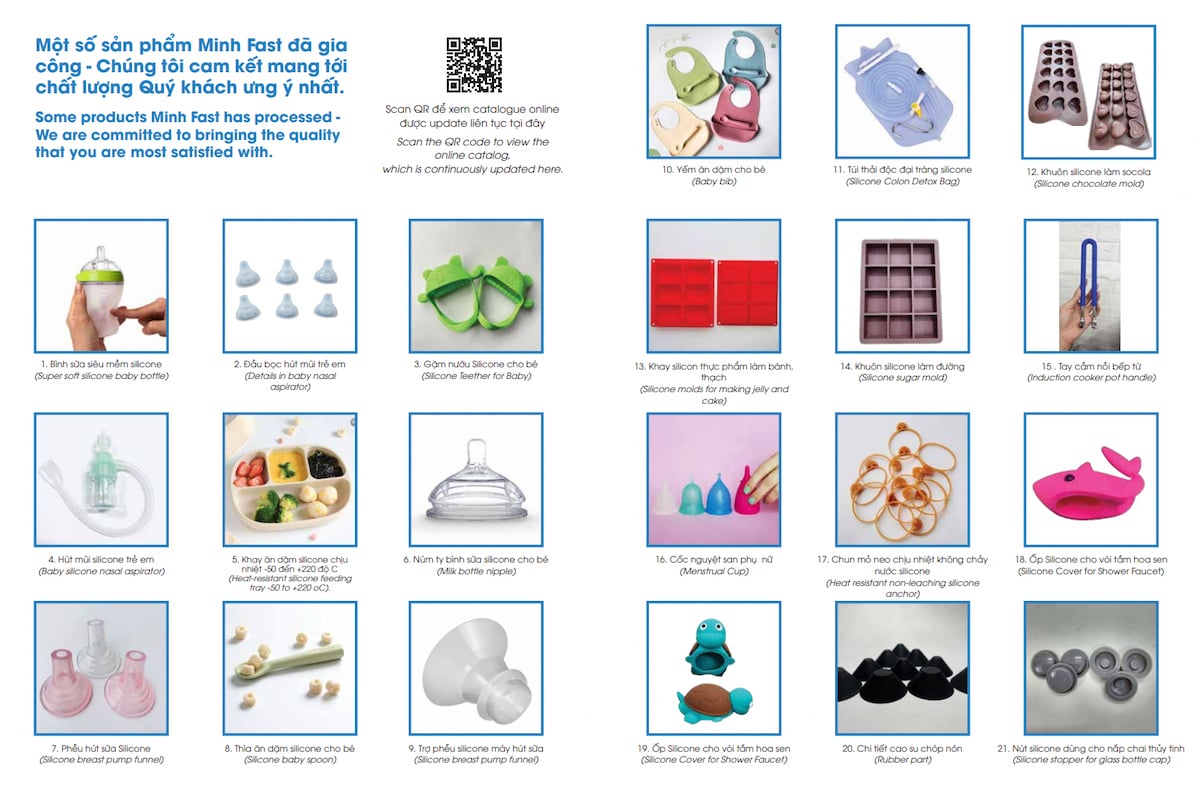
- Product Catalog
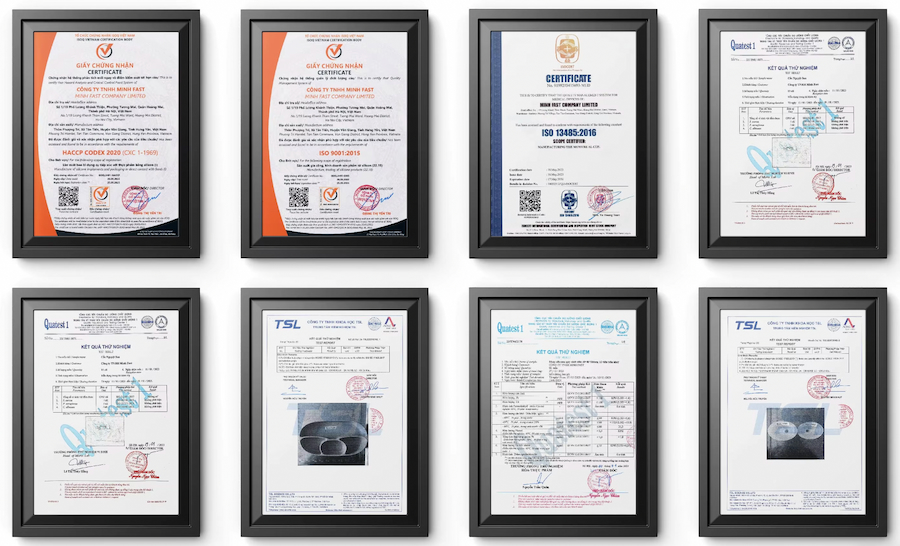
- Certification
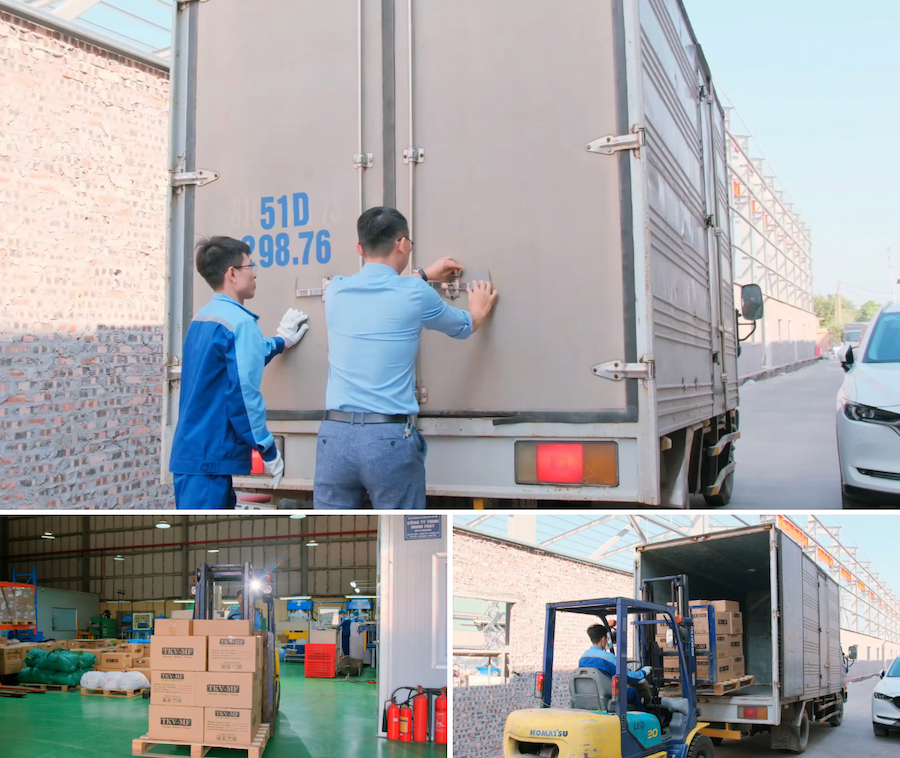
- Packaging & Shipping
- MINH FAST COMPANY LIMITED
- Factory Location
Every time you press a button on a remote control, a medical device, an industrial control panel, or a two-way radio and feel that soft, tactile "click," there's a good chance a silicone rubber keypad manufacturer designed and molded that interface.
Keypad manufacturers are a specialized corner of the electronics supply chain, and for OEM buyers, finding the right silicone rubber keypad manufacturer — rather than a generic plastics molder — is often the difference between a keypad that feels premium for ten years and one that cracks, fades, or loses tactile response within months.
What Are Keypad Manufacturers?
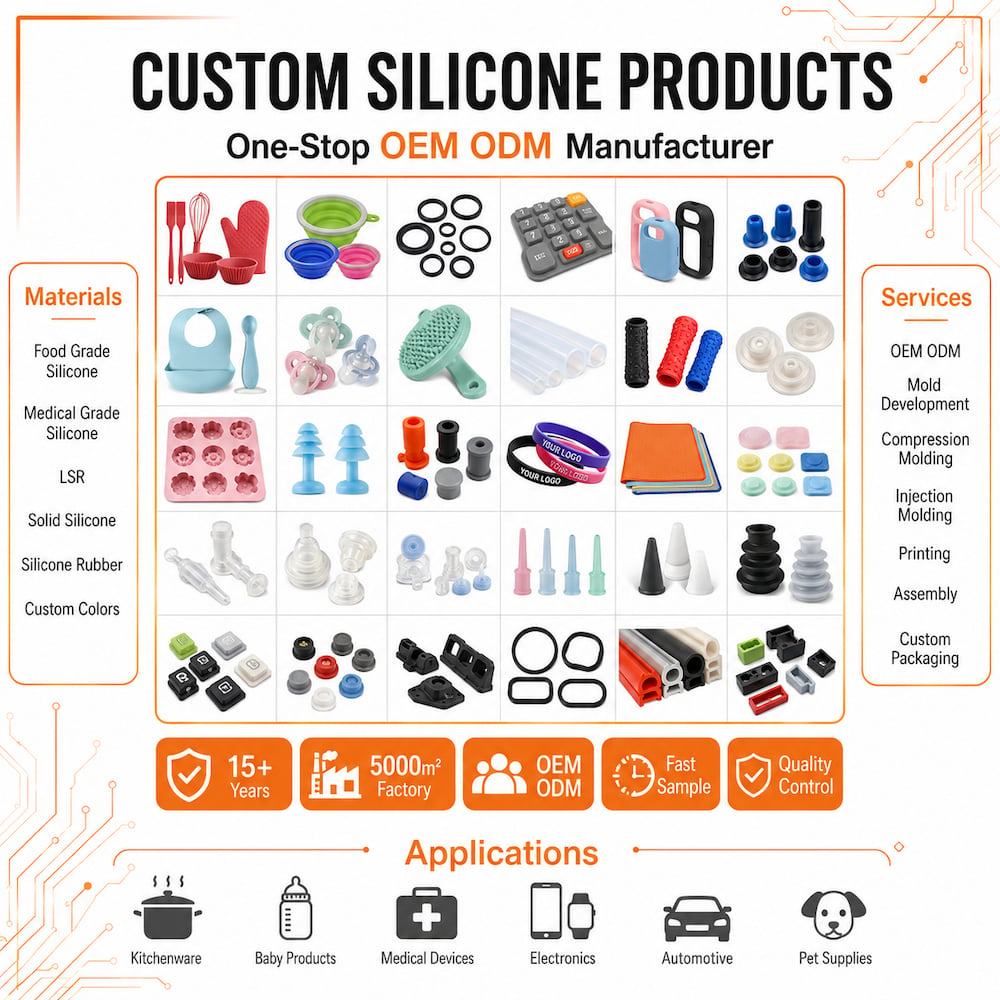
Keypad manufacturers are companies that design and mold the physical input interfaces — buttons, keys, and control surfaces — used in electronic products, alongside the switching mechanisms and printed circuit boards those interfaces sit on. A silicone rubber keypad manufacturer specifically works with silicone elastomer, using compression molding or liquid injection molding to produce a keypad in which pressing a button uniformly deforms a webbing structure to create tactile feedback, then returns to its resting position when pressure is released.
Silicone rubber keypads function as an electronic switch in one of two main ways:
-
Conductive keypads, where a carbon or gold-impregnated pill molded onto the back of each key contacts a printed circuit board when pressed, closing the circuit directly.
-
Non-conductive keypads, where the silicone key presses against a separate metal snap dome or tactile switch, which allows the switch cavity to be fully environmentally sealed since the silicone itself doesn't need to touch the PCB traces.
Beyond consumer electronics, silicone rubber keypads are widely used as a low-cost, reliable switching solution across medical devices, industrial control panels, automotive interiors, telecommunications equipment, and military and aerospace electronics — largely because the material combines a durable feel, long mechanical life, and the ability to double as an environmental seal against dust and moisture.
Top Silicone Rubber Keypad Manufacturers Around the World
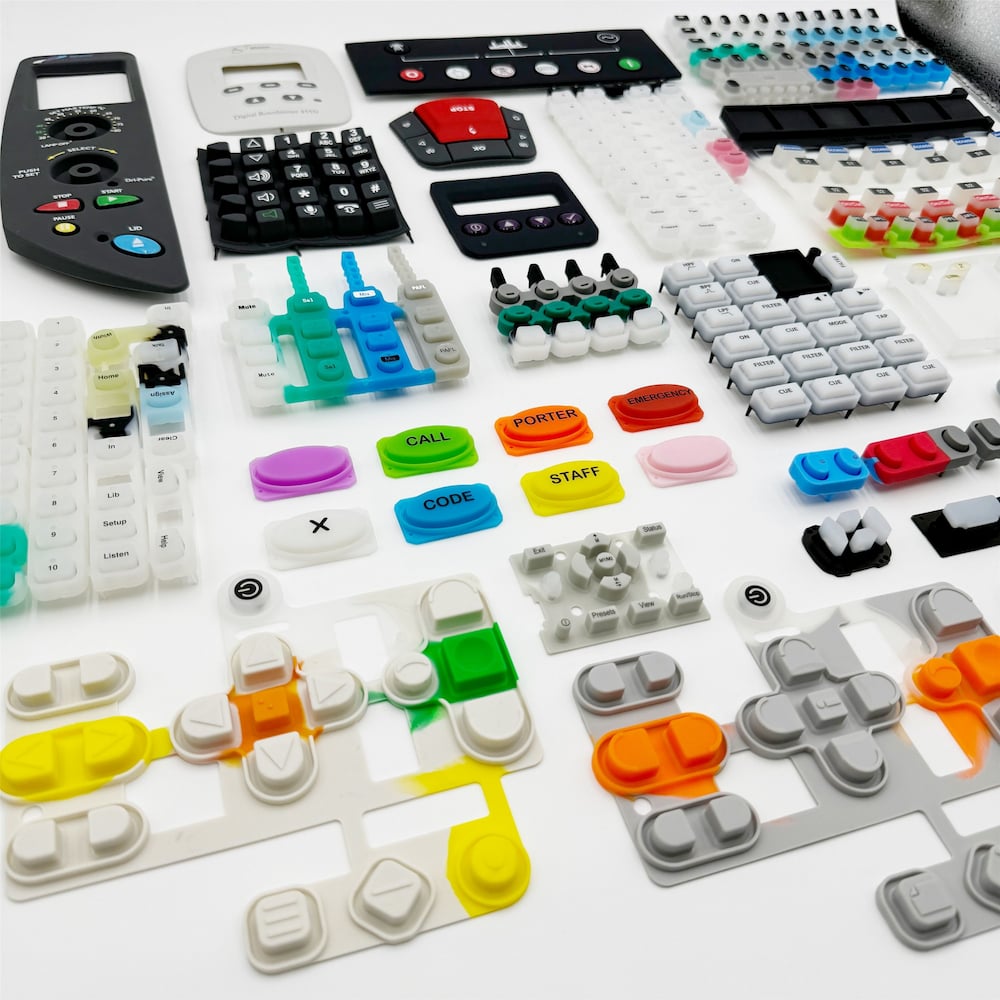
The following companies represent some of the best-known names among silicone rubber keypads suppliers, spanning several countries and offering OEM/ODM services to electronics brands and industrial buyers.
1. Epec Engineered Technologies (Epectec) — United States.
Strengths: Epec is one of the most established names in this space, operating for roughly 70 years out of New Bedford, Massachusetts. The site demonstrates deep technical depth — it covers all molding processes, laser etching, in-house graphics, and a genuinely differentiated feature: patented processes that mold light pipes and windows as an integral, single sealed part of the keypad rather than a separate assembled component. They also publish a detailed manufacturing process gallery (tool making, color placement, molding, curing) and a dedicated design guide covering actuation force and tolerances.
Weaknesses: The site is heavily gated toward "Request a Quote" CTAs with relatively thin public technical specs (no published Shore A ranges, no visible certifications like ISO numbers on the keypad pages themselves). It reads more like a broad electronics contract manufacturer (PCBs, batteries, cables) that treats keypads as one product line among many, rather than a keypad specialist.
Best fit for: Buyers who want a one-stop US-based electronics OEM partner (keypad + PCB + cable assembly in one relationship), especially for light-pipe/backlit designs.
Website: epectec.com.
2. Keyflex — Australia.
Strengths: Keyflex stands out for transparency — it's the only one of the six that publishes actual comparative durability data (an RCA abrasive wear test table comparing plated plastic keycaps, PU coatings, and uncoated silicone keypads by RCA cycle count). That's unusually rigorous for a supplier website. They also have 25+ years of experience and ISO 9002 certification dating back to 1988, plus a Hong Kong office for Asia-facing customers. Their content on laser etching and multi-colored keypad processes is genuinely educational rather than just marketing copy.
Weaknesses: The copywriting is repetitive — the phrase "silicone keypad manufacturer" appears so many times it reads as SEO-stuffed rather than natural. As an Australia/Hong Kong-based company without a stated China or US manufacturing base disclosed on the page, lead times and logistics to North America/Europe aren't addressed.
Best fit for: Buyers who value hard data over marketing claims, particularly for wear/durability comparisons, and Asia-Pacific-based buyers.
Website: keyflex.com.au.
3. Silicone Dynamics — United States.
Strengths: This is the most buyer-friendly site of the six. It's transparent about its structure — US-based (Bend, Oregon) engineering/design team, manufacturing operated in China — which is refreshingly honest compared to companies that obscure where production actually happens. They offer a genuinely useful free engineering sample kit showing 30–70 Shore A hardness options, different coatings, and contact types, which is a low-risk way for a buyer to evaluate before committing. Their FAQ section is unusually practical — it directly answers questions like "what hardness should I use" and "what's the minimum order," which most competitor sites leave vague.
Weaknesses: As a smaller, design-focused intermediary rather than a factory owner, there's an added layer between the buyer and the actual production line, which can affect how much direct control a buyer has over the manufacturing process.
Best fit for: First-time buyers or smaller brands who want US-based engineering support and hand-holding without needing to manage a China factory relationship directly.
Website: siliconedynamics.net.
4. Mekoprint A/S — Denmark.
Strengths: Mekoprint's page is the most design-education-oriented of the six. Rather than pushing a quote form immediately, it explains why silicone rubber keypads outperform membrane switches for 3D key geometry (concave buttons, split lines, multi-level designs) and offers real case studies (e.g., a soundless keypad for acoustic measurement equipment, backlit keypads for agricultural machinery). It also positions the keypad as part of a broader HMI integration service — combining keypad, front foil, display, and PCB into one assembly — which is a strong value proposition for buyers who don't want to manage multiple suppliers. Sustainability credentials (EcoVadis Silver, UN Global Compact) are also visible, which is relevant for EU buyers with ESG requirements.
Weaknesses: Being a large, diversified European industrial group (also doing sheet metal, cable harnesses, EMI shielding, etc.), keypads are clearly one of many product lines, and pricing/MOQ transparency is essentially absent from the page.
Best fit for: EU-based buyers, especially in industrial, agricultural, or medical equipment, who want a full HMI module rather than a standalone keypad component.
Website: mekoprint.com.
5. APEM Group — France.
Strengths: APEM (part of the IDEC group) is a large, established panel/switch component manufacturer with a genuinely global footprint — separate sites for France, Germany, USA, and China. The rubber keypad page is concise and spec-forward: it explicitly states IP69K sealing capability, which is a meaningful, verifiable technical claim (most competitors just say "sealed" without a rating). It sits within a much broader panel solutions catalog (metal keypads, tactile keypads, membrane keypads, capacitive keypads), which is useful for buyers comparing technologies for the same project.
Weaknesses: This particular page is thin — essentially a single feature list with no design guide, no case studies, and no visible certifications or testing data, in contrast to how detailed APEM's broader corporate site is elsewhere. It feels like one entry in a large catalog rather than a dedicated keypad specialist page.
Best fit for: Buyers already comparing multiple HMI technologies (rubber vs. membrane vs. capacitive) who want one large, multi-region supplier group to standardize on, particularly where IP-rated sealing is a hard requirement.
Website: apem.com.
6. Xiamen Better Silicone Rubber Co., Ltd — China.
A China-based factory producing silicone rubber keypads and buttons to customer drawings, samples, or ideas, Better Silicone offers laser-etched and silk-screen-printed keypads, multiple conductive pill and coating options, and in-house testing for dimension, actuation force, life cycle, and surface abrasion, serving OEM buyers across a wide range of industries.
Website: rubber-keypad.com.
7. Silicone Technology Corp (SiTech) — United States.
Headquartered in Newport News, Virginia with more than 75 years of combined experience in the field, SiTech uses liquid silicone rubber injection molding to produce complex custom keypads, housings, and related components for military, medical, telecommunications, and consumer electronics applications, with rapid prototyping, die-cutting, laser marking, and full keyboard assembly services under ISO 9001.
As with any cross-border sourcing decision, buyers should independently verify current certifications, MOQs, and OEM capability directly with each manufacturer, since production capacity and specialization can change over time.
Popular Silicone Rubber Keypad Products Today
The silicone rubber keypad category covers a wide range of design variations that buyers commonly request from a rubber keypad manufacturer:
-
Standard colorized keypads — the most common type, molded in a solid Pantone-matched color with screen-printed or laser-etched legends.
-
Backlit / translucent keypads — molded from translucent silicone, then painted and laser-etched so light passes only through the etched legend areas, giving crisp, even illumination in low-light conditions.
-
Multi-colored / co-molded keypads — keypads with several distinct key colors molded directly into the part rather than painted on, reducing the risk of ink wear over the product's lifetime.
-
Keypads with plastic keycaps — a plastic cap mounted over a silicone rubber base, giving a harder, more "premium" plastic feel while retaining the silicone's sealing and tactile properties underneath.
-
Epoxy-coated keypads — a clear or tinted epoxy dome applied over the keytop for a glossy, 3D, scratch-resistant finish popular in medical and consumer electronics.
-
Wear-resistant coated keypads — a PU or UV coating applied after curing to extend the working life of printed legends in high-use or harsh environments.
-
Thermoformed / plastic-feel keypads — a thin polycarbonate or polyester layer thermoformed over a silicone or plastic insert, often used for compact handheld devices where key pitch is tight.
-
Backlit silicone keyboards / keyboard pads — full-size silicone keyboard mats and keyboard protective pads used in laptops, POS terminals, and ruggedized computing equipment.
Criteria for Choosing a Silicone Rubber Keypad Manufacturer Worldwide
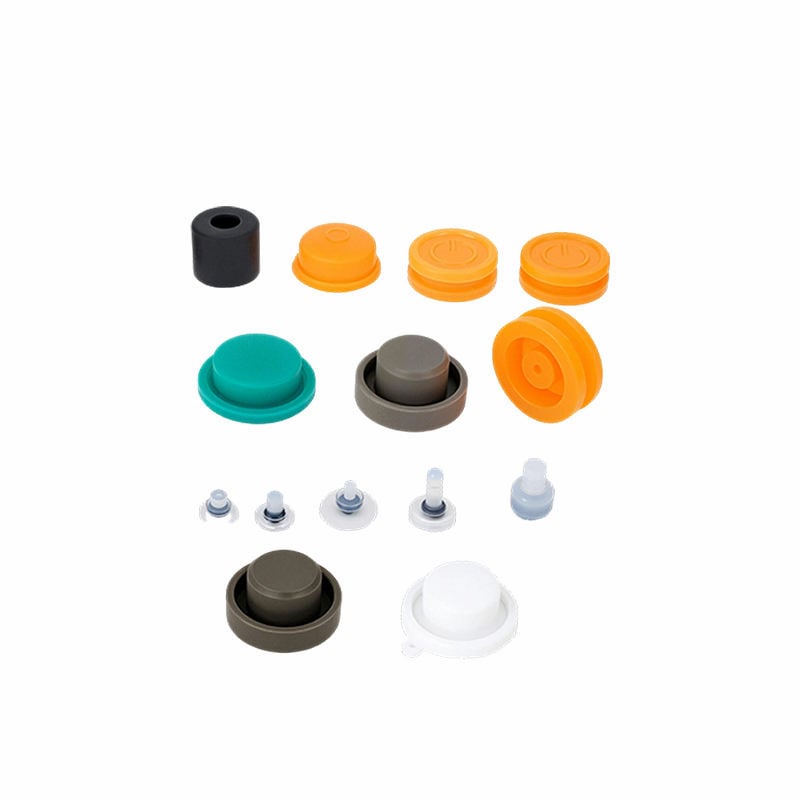
Whether sourcing from the US, Europe, Australia, or China, buyers evaluating a silicone rubber keypad manufacturer should weigh the same core factors:
-
In-house tool making capability — manufacturers with their own EDM and CNC tool shop can iterate key geometry, webbing thickness, and actuation force faster than factories that outsource tooling.
-
Molding process fit — compression molding is the most common and cost-effective method for standard keypads, while liquid silicone injection (LSR) molding suits higher-precision, higher-volume, or more complex geometries.
-
Conductive contact options — confirm whether the manufacturer offers carbon pill, gold-plated pill, or metal snap dome contact methods, since this affects both cost and long-term contact resistance/reliability.
-
Graphics and finishing capabilities — in-house laser etching, screen printing, epoxy coating, and wear-resistant coating reduce the number of outside vendors involved and generally improve quality consistency.
-
Backlighting expertise — light-pipe integration, translucent material handling, and laser-etch legend design require specific process knowledge that not every keypad molder has mastered.
-
Certifications — ISO 9001 as a baseline, plus IPC standards, ITAR registration for defense-related products, and UL/CSA approval where relevant to your end product.
-
Cycle/life testing capability — ask whether the manufacturer performs actuation force testing, RCA abrasion wear testing, and life-cycle testing (often into the hundreds of thousands of cycles) as part of standard quality control.
-
MOQ and sample/prototype tooling options — many manufacturers offer lower-cost prototype tooling for initial samples before committing to full production tooling, which is worth asking about for new designs.
Technical Specifications for Manufacturing Silicone Rubber Keypads
Producing a silicone rubber keypad at scale involves a specific set of engineering parameters that a competent silicone rubber keypad manufacturer should be able to walk through in detail:
-
Material grade — gum stock or liquid silicone rubber, typically 100% silicone elastomer chosen for thermal stability, chemical resistance, and long flex life; UL 94V0 flame-retardant grades are available but require special ordering and larger minimum buys.
-
Hardness (Shore A durometer) — commonly specified in the 30–70 Shore A range; softer compounds (around 50–55 Shore A) suit keys where the silicone webbing itself provides the actuation force, while firmer compounds (around 60 Shore A) suit keys backed by a metal snap dome.
-
Webbing and key travel design — the shape and thickness of the webbing beneath each key determines actuation force and travel distance, typically around 0.04–0.05 inches of travel when the silicone alone provides the tactile response, or a much shorter 0.00–0.01 inches when a metal dome does.
-
Conductive contact construction — carbon-impregnated silicone pills co-molded to the key underside for conductive keypads, or a separate metal dome/tactile switch assembly for non-conductive designs.
-
Legend and graphics method — screen printing for simple solid-color legends, laser etching for translucent backlit legends, or in-mold graphics for more complex multi-color artwork.
-
Light pipe and window integration — some manufacturers can mold light pipes and clear windows as an integral, single sealed part of the keypad rather than as a separate assembled component.
-
Color and finish options — solid Pantone-matched colors, translucent compounds for backlighting, phosphorescent (glow-in-the-dark) pigments for low-light visibility, and multiple coating finishes (matte PU, gloss epoxy).
-
Sealing performance — for non-conductive keypad designs, the switch cavity can be environmentally sealed to IP-rated levels, protecting against dust and moisture ingress in outdoor, medical, or industrial applications.
-
Durability testing benchmarks — actuation cycle testing and RCA abrasive wear testing (commonly referenced against ASTM F2357) to compare coating and printing durability across different finish options.
Notes When Placing OEM/ODM Orders for Custom Silicone Keypads
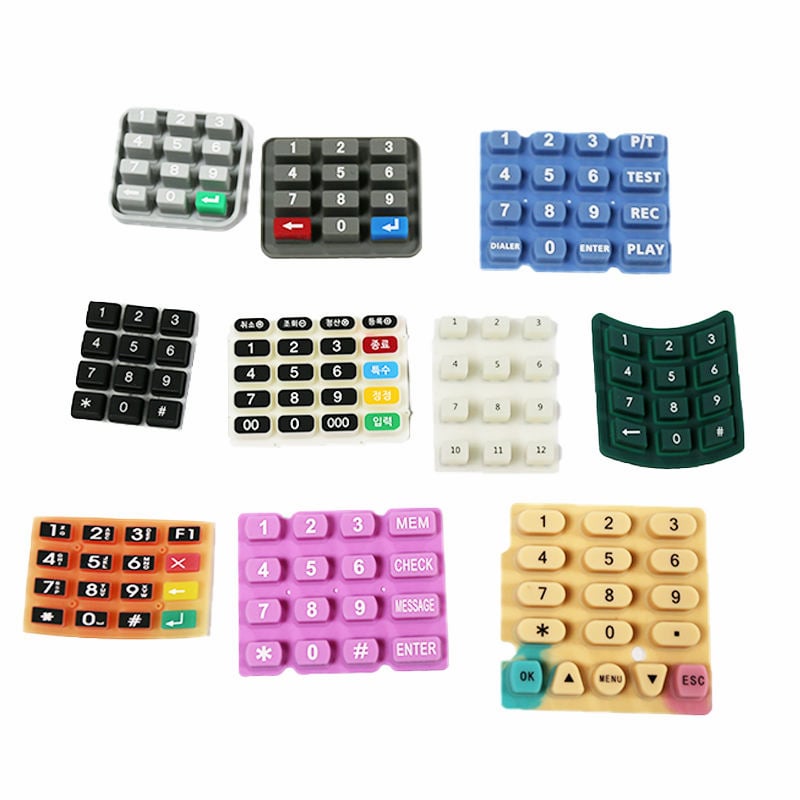
Buyers new to commissioning a custom silicone keypad or custom rubber keypad project should keep the following in mind before placing a production order:
-
Provide a clear technical drawing or reference part. Key layout, travel distance, target actuation force, and contact method (carbon pill vs. metal dome) all affect tooling design, and a 2D/3D drawing speeds up quoting significantly compared to a verbal description alone.
-
Decide on prototype tooling vs. production tooling early. Many manufacturers offer lower-cost prototype tooling — often around a third of full production tooling cost — for initial design validation runs, with production tooling built once the design is finalized.
-
Request an engineering sample kit if available. Several manufacturers offer sample keypads showing different durometers, coatings, laser etching, and contact methods, which is a fast, low-cost way to evaluate options before committing to a design.
-
Clarify backlighting requirements upfront, since translucent material, light pipe integration, and laser-etch legend design all need to be built into the tooling from the start rather than added later.
-
Specify life-cycle and environmental requirements, including target actuation cycles, operating temperature range, and any IP sealing rating needed, so the manufacturer can recommend the right durometer and construction method.
-
Request documentation upfront, including material certifications, RoHS compliance, and any ISO 9001, ITAR, or UL/CSA certifications relevant to your target market.
-
Factor mold development lead time into your project timeline separately from production lead time, since new tooling can add several weeks on top of standard manufacturing schedules.
-
Confirm mold ownership terms in writing before production begins, since policies on retaining tooling after a paid mold fee vary by manufacturer.
Custom Silicone Keypad OEM/ODM at Minh Fast
As buyers diversify silicone component sourcing beyond the traditional US, European, and China-only supply chains, Minh Fast (vietnamsiliconerubber.com) offers an OEM/ODM production base for custom silicone rubber keypads and silicone keyboards, drawing on its broader experience manufacturing food-grade, industrial-grade, and consumer-grade silicone rubber products. Minh Fast produces silicone keyboards and keypad pads for laptop, remote control, and industrial applications, offering flexible, elastic, waterproof, and dust-resistant construction that can be customized in material hardness, size, shape, and key function to match a customer's requirements.
|
Specification |
Details |
|
Material |
100% silicone rubber (gum stock / LSR), food/medical/industrial grade |
|
Hardness |
30–70 Shore A (custom) |
|
Molding Process |
Compression molding or LSR injection molding |
|
Key Travel |
0.04–0.05″ (webbing-actuated) or 0.00–0.01″ (metal dome-backed) |
|
Contact Type |
Carbon pill, gold-plated pill, or metal snap dome |
|
Color |
Solid Pantone, translucent (backlit), multi-color co-molding |
|
Graphics |
Screen printing, laser etching, epoxy coating |
|
Sealing |
IP-rated on request (non-conductive designs) |
|
Tolerance |
±0.05 mm standard |
|
Operating Temp |
-40°C to +200°C |
|
Certifications |
FDA 21 CFR 177.2600, RoHS, REACH |
|
QC Testing |
Dimension, actuation force, life-cycle, abrasion |
|
MOQ / Lead Time |
Confirmed per project |
Minh Fast Company Limited | +84 8899 14599 | minhfastsales@gmail.com | vietnamsiliconerubber.com
For electronics brands, OEM buyers, and distributors evaluating a silicone rubber keypad manufacturer outside the conventional sourcing hubs, Minh Fast offers competitive labor costs, a growing technical workforce, and increasing alignment with FDA, RoHS, and REACH compliance expectations. Buyers interested in custom silicone keypads, backlit keyboard pads, or private-label user interface components can reach the Minh Fast team directly to discuss mold development, MOQ tiers, and sample production.
See more: Silicone Rubber Elastic Tubing – Heat-Resistant and Waterproof
Product Catalog
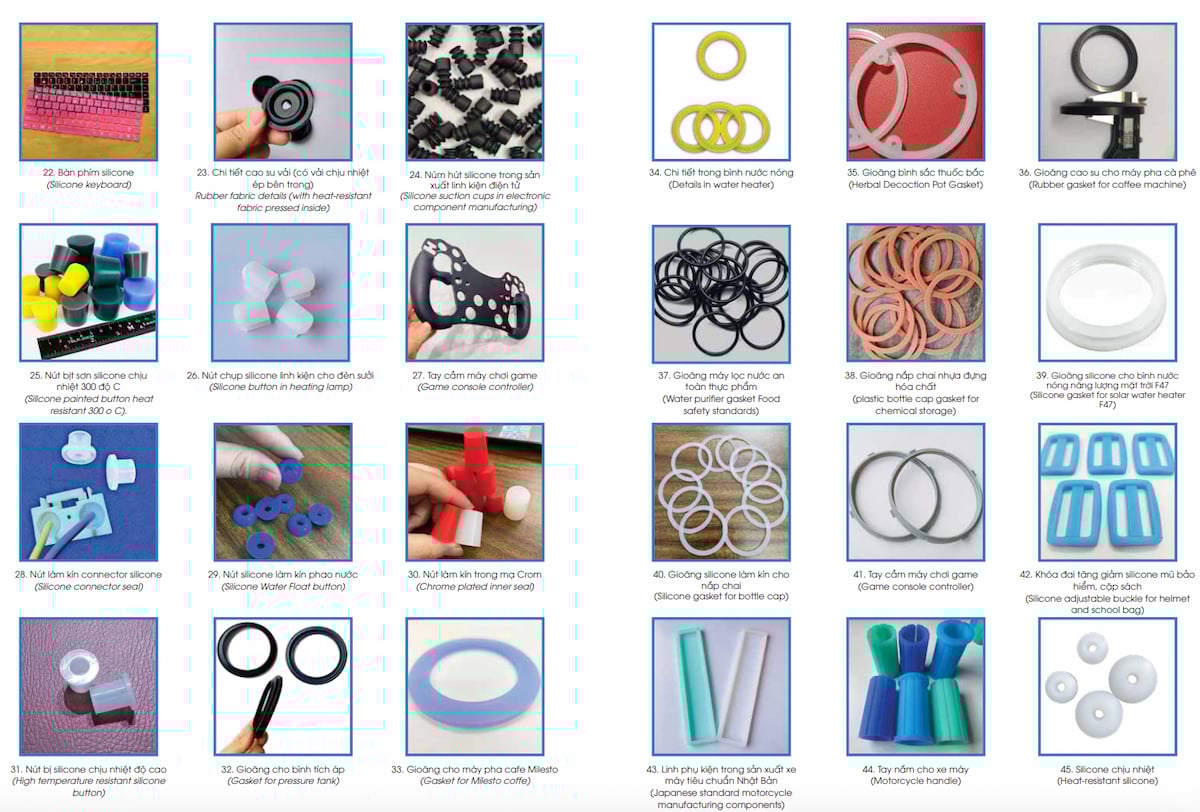
Certification
Packaging & Shipping

MINH FAST COMPANY LIMITED
Head Office: No. 1/19 Luong Khanh Thien Street, Tuong Mai Ward, Hanoi, Vietnam
Phone / Zalo / WhatsApp: +84 8899 14599
Email: Thamsiliconetkv@gmail.com | Minhfastsales@gmail.com
YouTube: Minh Fast Silicone Channel