


90mm O Ring Silicone Rubber OEM Manufacturing
- What Is a 90mm O Ring?
- Standard Dimensions for 90mm O Ring
- O-Ring Materials: Technical Comparison
- Mechanical Properties & Performance Data
- Applications of 90mm O Ring
- Quality Standards & Certifications
- Groove Design for 90mm O Ring
- Manufacturing Process of O-Rings (Detailed Technical Overview)
- 1. Material Mixing (Compounding)
- 2. Compression or Injection Molding
- 3. Vulcanization (Curing)
- 4. Post-Curing
- 5. Trimming and Finishing
- 6. Inspection & Quality Control
- Manufacturing Methods (Technical Comparison)
- Accuracy & Quality Control
- OEM Manufacturing for 90mm Rubber O Ring
- MINH FAST – Global OEM O-Ring Manufacturer
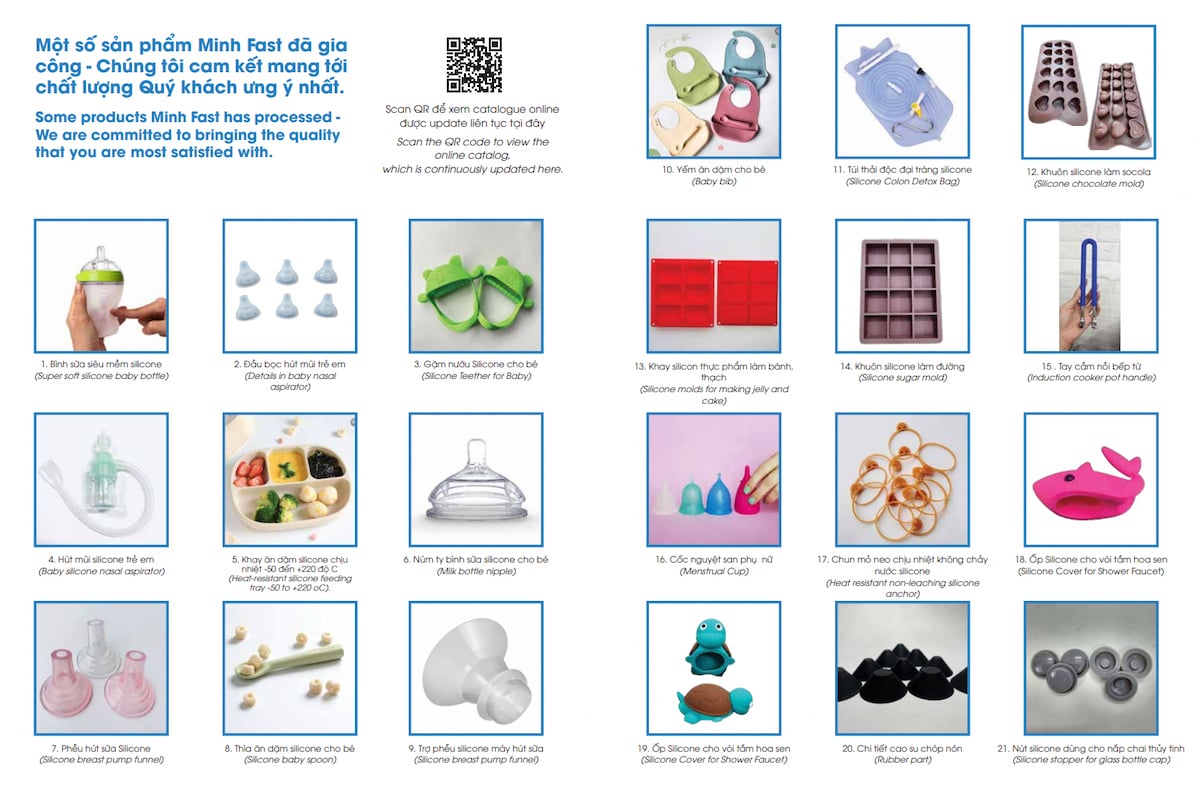
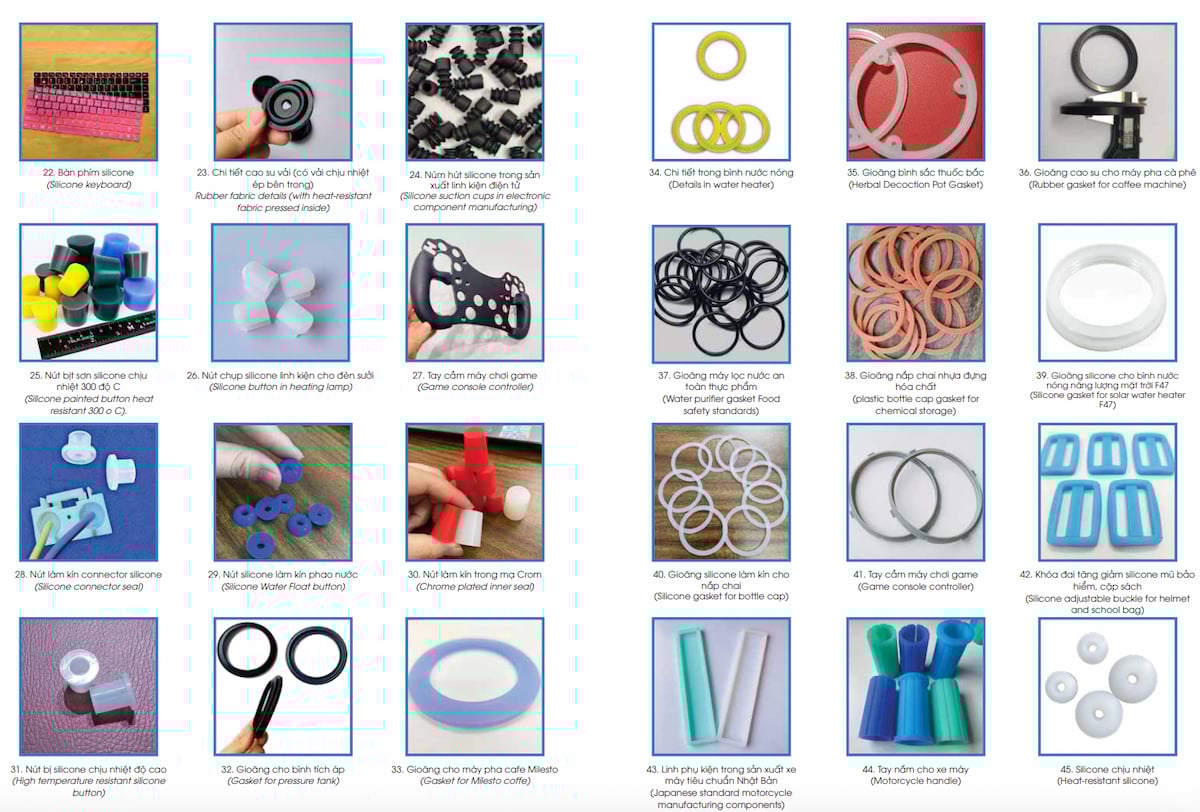
- Product Catalog
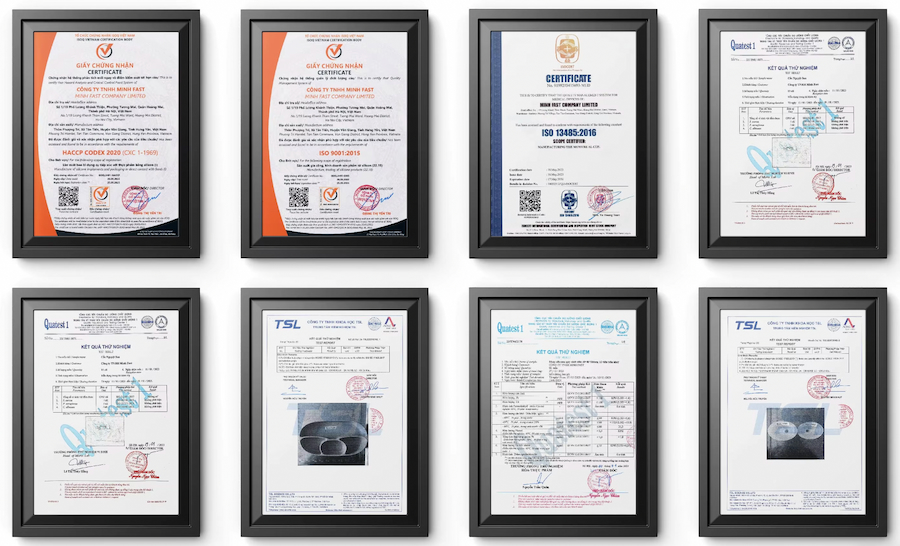
- Certification
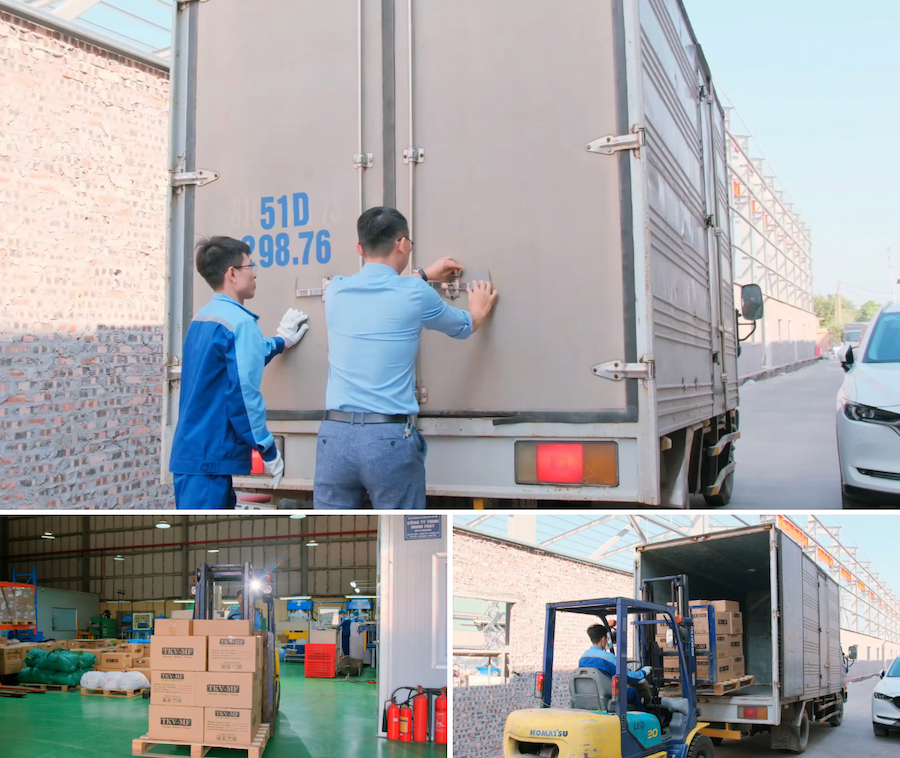
- Packaging & Shipping
- MINH FAST COMPANY LIMITED
- Factory Location
The 90mm o ring is a widely used sealing component in industrial systems, offering reliable performance in applications ranging from hydraulics and automotive to food processing and heavy machinery. Whether you are sourcing a standard o ring 90mm or specifying a custom-engineered seal, understanding technical parameters such as material properties, dimensional standards, and tolerance control is essential.
What Is a 90mm O Ring?

A 90mm rubber o ring is a circular elastomer seal with an inner diameter (ID) of 90 mm, designed to prevent leakage between two surfaces under compression.
Basic Structure
|
Parameter |
Description |
|
Inner Diameter (ID) |
90 mm |
|
Cross Section (CS) |
Varies (e.g., 2mm, 3mm, 5mm, etc.) |
|
Outer Diameter (OD) |
ID + (2 × CS) |
|
Material |
Silicone, NBR, EPDM, FKM, etc. |
|
Application |
Static or dynamic sealing |
Standard Dimensions for 90mm O Ring
O-rings follow international standards to ensure compatibility across equipment. Below are common cross-section sizes applicable to o ring 90mm.
Cross-Section Standard Table
|
Standard |
Cross Section Sizes (mm) |
|
AS568 (USA) |
1.78 · 2.62 · 3.53 · 5.33 · 6.99 |
|
ISO 3601 |
1.80 · 2.65 · 3.55 · 5.30 · 7.00 |
|
JIS B 2401 |
1.90 · 2.40 · 3.10 · 3.50 · 5.70 |
|
BS1516 |
1.90 · 2.40 · 3.10 · 3.50 · 5.70 |
|
Metric |
1.00 → 20.00 |
Example Dimensions for 90mm O Ring
|
ID (mm) |
CS (mm) |
OD (mm) |
|
90 |
2 |
94 |
|
90 |
3 |
96 |
|
90 |
5 |
100 |
|
90 |
6 |
102 |
|
90 |
7 |
104 |
Tolerance Standards (ISO 3601)
|
Dimension |
Tolerance |
|
ID ≤ 100 mm |
±0.10 to ±0.25 mm |
|
CS ≤ 3.5 mm |
±0.08 mm |
|
CS > 3.5 mm |
±0.10 mm |
High-precision applications require strict adherence to these tolerances for sealing integrity.
O-Ring Materials: Technical Comparison
Material selection determines performance under temperature, pressure, and chemical exposure.
Material Comparison Table
|
Material |
Temp Range |
Chemical Resistance |
Hardness (Shore A) |
Typical Use |
|
NBR |
-40°C to +120°C |
Oil, fuel |
60–90 |
Automotive, hydraulics |
|
Silicone (VMQ) |
-60°C to +230°C |
Moderate |
40–80 |
Food, medical |
|
EPDM |
-50°C to +150°C |
Water, steam |
50–90 |
HVAC, plumbing |
|
FKM (Viton) |
-20°C to +250°C |
Excellent |
60–90 |
Chemical, aerospace |
|
HNBR |
-40°C to +150°C |
High |
60–90 |
Industrial systems |
Silicone O-Ring Properties
Silicone is widely used for 90mm rubber o ring in food and medical industries:
-
High thermal stability
-
Non-toxic and FDA compliant
-
Flexible at low temperatures
-
Excellent aging resistance
Mechanical Properties & Performance Data
Typical Mechanical Properties
|
Property |
Range |
|
Tensile Strength |
7–15 MPa |
|
Elongation at Break |
150–600% |
|
Compression Set |
10–40% |
|
Hardness |
40–90 Shore A |
Compression & Sealing Performance
|
Compression Ratio |
Performance |
|
10–15% |
Low sealing force |
|
20–30% |
Optimal sealing |
|
>30% |
Risk of damage |
Applications of 90mm O Ring
The 90 mm o ring is widely used across industries:
Industrial Applications
-
Hydraulic cylinders
-
Pumps and valves
-
Pneumatic systems
Automotive
-
Engine sealing
-
Fuel systems
-
Cooling systems
Food & Medical
-
Food-grade processing equipment
-
Medical devices
-
Pharmaceutical systems
Heavy Equipment
-
Mining machinery
-
Construction equipment
-
Oil & gas systems
Quality Standards & Certifications
International Standards
|
Standard |
Purpose |
|
ISO 3601 |
O-ring dimensions and tolerances |
|
ASTM D2000 |
Material classification |
|
DIN 3771 |
German industrial standard |
|
JIS B 2401 |
Japanese standard |
Food & Medical Certifications
|
Certification |
Application |
|
FDA |
Food contact |
|
LFGB |
European food safety |
|
USP Class VI |
Medical grade |
|
RoHS |
Environmental compliance |
Groove Design for 90mm O Ring
Proper groove design ensures sealing efficiency.
Groove Dimensions
|
Parameter |
Recommendation |
|
Groove Depth |
75–85% of CS |
|
Groove Width |
CS × 1.5 |
|
Surface Finish |
Ra ≤ 0.8 µm |
Clearance & Extrusion Control
|
Pressure Level |
Recommendation |
|
Low |
Standard groove |
|
Medium |
Tight clearance |
|
High |
Use backup ring |
Manufacturing Process of O-Rings (Detailed Technical Overview)

The manufacturing of a high-quality 90mm o ring requires strict control at every stage to ensure dimensional accuracy, material consistency, and sealing performance. Below is a more in-depth explanation of each production step:
1. Material Mixing (Compounding)
This is the foundation of O-ring quality. Raw elastomers are blended with additives to achieve the desired properties.
Key components include:
-
Base polymer (NBR, Silicone, EPDM, FKM)
-
Fillers (carbon black, silica)
-
Plasticizers and processing aids
-
Vulcanizing agents (sulfur or peroxide)
-
Color pigments
Technical considerations:
-
Uniform dispersion ensures consistent hardness and strength
-
Mixing is typically done using Banbury mixers or two-roll mills
-
Precise formulation affects temperature resistance, elasticity, and chemical compatibility
2. Compression or Injection Molding
The compounded material is shaped into O-rings using molds.
Compression Molding
-
Material is placed into a heated mold cavity
-
Pressure is applied to shape the O-ring
-
Suitable for standard sizes like o ring 90mm
Injection Molding
-
Material is injected into closed molds under high pressure
-
Ideal for high-volume and precision products
Technical notes:
-
Mold design directly affects dimensional tolerance
-
Multi-cavity molds improve production efficiency
3. Vulcanization (Curing)
Vulcanization is the chemical process that transforms soft rubber into a durable, elastic material.
Process details:
-
Heat activates cross-linking between polymer chains
-
Typical temperature: 150°C – 200°C
-
Time depends on material and thickness
Benefits:
-
Improves elasticity and strength
-
Enhances heat and chemical resistance
-
Stabilizes shape and dimensions
4. Post-Curing
Post-curing is especially important for high-performance and food-grade O-rings.
Purpose:
-
Removes volatile substances and residual chemicals
-
Improves compression set and long-term stability
Typical conditions:
-
200°C for 2–24 hours depending on material
This step is critical for applications requiring FDA or medical compliance.
5. Trimming and Finishing
After molding, excess material (flash) must be removed.
Methods include:
-
Manual trimming
-
Cryogenic deflashing (freezing and tumbling)
-
Precision cutting
Additional finishing processes:
-
Surface polishing
-
Lubrication coating
-
Marking or labeling
6. Inspection & Quality Control
Final inspection ensures the o ring meets all specifications.
Inspection parameters:
-
Dimensional accuracy (ID, CS, OD)
-
Hardness (Shore A)
-
Surface defects
-
Mechanical properties
Testing equipment:
-
Optical measuring systems
-
Tensile testing machines
-
Compression set testers
Manufacturing Methods (Technical Comparison)
Different production methods are used depending on design complexity, volume, and precision requirements.
|
Method |
Application |
Advantages |
Limitations |
|
Compression Molding |
Standard O-rings |
Cost-effective, simple tooling |
Lower precision vs injection |
|
Injection Molding |
High precision O-rings |
High accuracy, automation, consistency |
Higher tooling cost |
|
Transfer Molding |
Complex shapes |
Better flow control, suitable for inserts |
More complex process |
-
Use compression molding for standard products like 90mm rubber o ring in medium volumes
-
Choose injection molding for high-precision, high-volume production
-
Select transfer molding for complex geometries or insert-molded components
The quality of an O-ring is directly tied to its manufacturing process. From material mixing to final inspection, every step must be carefully controlled to ensure that products like o ring 90mm deliver reliable sealing performance in demanding applications.
Accuracy & Quality Control
Testing Equipment
-
Hardness tester (Shore A)
-
Tensile testing machine
-
Compression set tester
-
Thermal aging oven
Inspection Process
|
Stage |
Control |
|
Incoming Material |
Chemical composition |
|
In-Process |
Dimensional check |
|
Final Inspection |
Performance testing |
OEM Manufacturing for 90mm Rubber O Ring
Custom manufacturing allows:
-
Non-standard sizes
-
Custom materials
-
Branding and packaging
OEM Process Table
|
Step |
Description |
|
Design |
CAD & specification |
|
Tooling |
Mold fabrication |
|
Production |
Mass manufacturing |
|
QC |
Testing & inspection |
|
Delivery |
Global shipping |
MINH FAST – Global OEM O-Ring Manufacturer
For businesses seeking reliable OEM production, MINH FAST is a trusted partner specializing in silicone and rubber O-rings.
Website: https://vietnamsiliconerubber.com/
The 90mm o ring is a critical sealing component used in a wide range of industries. From selecting the right material to ensuring dimensional accuracy and compliance with international standards, every detail plays a role in performance.
Whether you need a standard 90 mm o ring or a custom 90mm rubber o ring, working with a qualified OEM manufacturer ensures reliability, durability, and cost efficiency.
For global sourcing and custom solutions, MINH FAST provides high-quality manufacturing with international delivery—making it an ideal partner for your sealing needs.
See more: O Ring 30mm Silicone Rubber OEM Manufacturing

Product Catalog
Certification
Packaging & Shipping

MINH FAST COMPANY LIMITED
Head Office: No. 1/19 Luong Khanh Thien Street, Tuong Mai Ward, Hanoi, Vietnam
Phone / Zalo / WhatsApp: +84 8899 14599
Email: Thamsiliconetkv@gmail.com | Minhfastsales@gmail.com
YouTube: Minh Fast Silicone Channel