- What Are Silicone Masking Plugs?
- Structure and Operating Principle
- Technical Criteria for Selecting Rubber Masking Plugs
- Hole Diameter and Stud Diameter
- Washer Thickness
- Temperature Resistance
- Multiple-Use Capability
- Compatibility with Round and Oval Holes
- Product Specifications and Practical Applications
- Reference Pricing by Hole Diameter and Order Quantity
- Suitable Users and Operating Conditions
- Manufacturing Materials: Silicone, NBR, and EPDM Comparison
- Important Considerations When Ordering Custom Rubber Masking Plugs
- Quick FAQ About Custom Rubber Masking Plugs
- Minh Fast – Custom Silicone Masking Plugs - Masking silicone washer cap
- Product Catalog
- Certification
- Packaging & Shipping
- MINH FAST COMPANY LIMITED
- Factory Location
In powder coating, plating, and precision machining processes, protecting screw holes and positioning holes from paint, chemicals, or surface-treatment solutions is essential. Rubber masking plugs are a widely used solution for these applications thanks to their flexible design, easy installation, and compatibility with different hole sizes. The following article explains the structure, technical specifications, advantages, and selection criteria for rubber masking plugs suitable for different industrial applications.
What Are Silicone Masking Plugs?
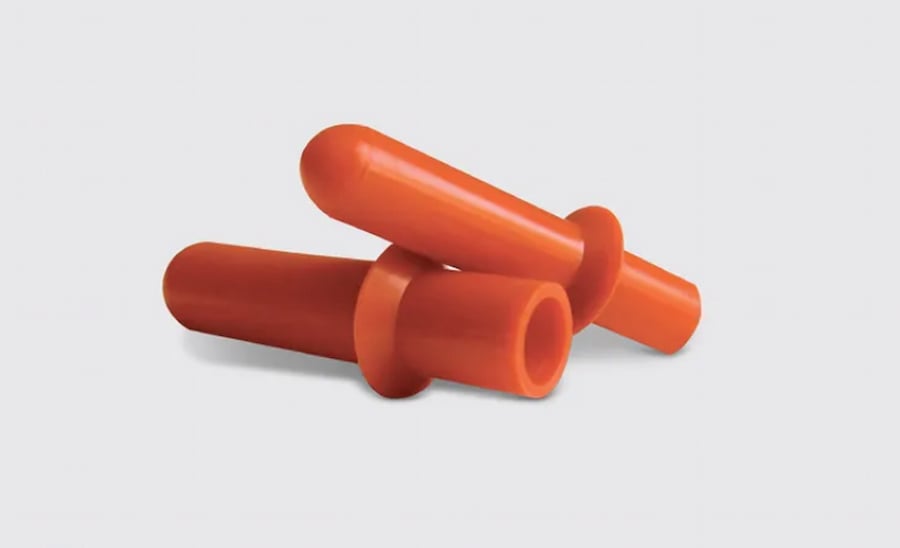
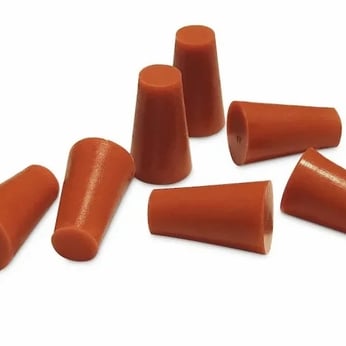
Silicone masking plugs are specialized masking components used to protect holes, studs, threads, and other areas from unwanted coating, paint, plating, or surface treatment during industrial manufacturing processes.
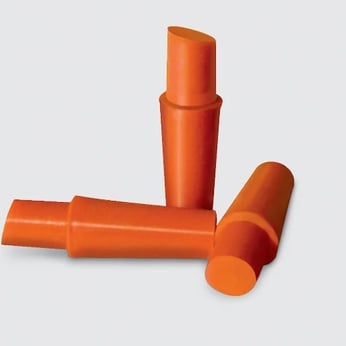
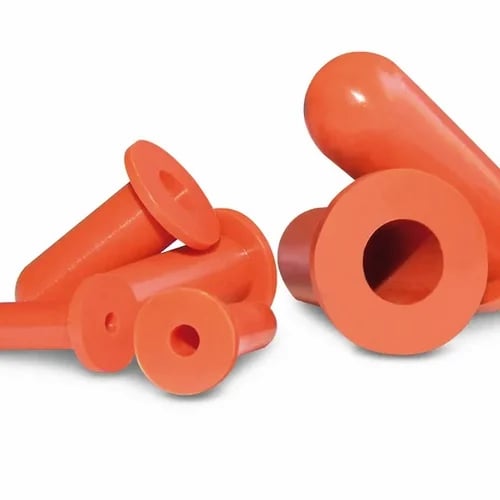
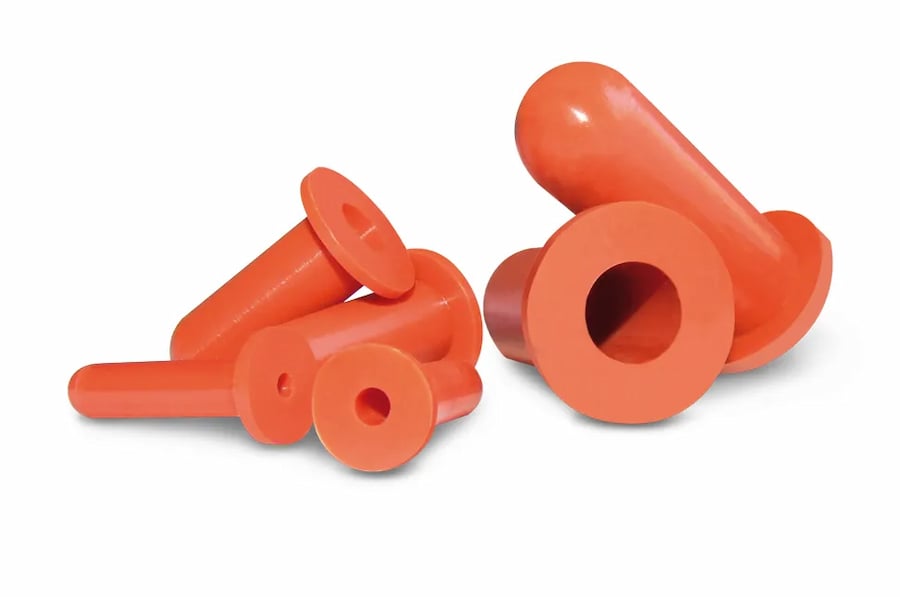
A typical masking plug consists of a flexible sealing body that fits into a hole or opening. Some designs also feature an enlarged flange or washer that extends over the surrounding surface. This configuration helps protect both the opening and the area immediately around it in a single installation step.
Compared with conventional solid rubber plugs, masking plugs with an integrated washer can provide a larger masking area while maintaining a secure fit inside the hole. Depending on the design, they can be used for round or specially shaped openings and can be manufactured in different sizes to match specific workpieces.
Silicone is commonly selected for applications involving elevated temperatures because of its temperature resistance and flexibility. Other elastomers, such as NBR or EPDM, may also be used when the application requires different resistance properties, such as resistance to oils, grease, or environmental exposure.
Structure and Operating Principle
Sealing Body
The body of a rubber masking plug is generally cylindrical or slightly tapered. Its primary function is to seal threaded holes, positioning holes, or bolt holes, preventing paint, powder coating material, or plating solutions from entering the threads or contacting the surface that needs to be protected.
Surrounding Washer
The key difference from conventional rubber plugs is the enlarged, thin disc-shaped washer surrounding the hole opening. This washer sits directly against the workpiece surface and also covers the area around the hole opening. This area is often left unprotected when a conventional hole plug is used, which can result in uneven coating or powder buildup around the edge after the masking component is removed.
Adjusting the Inner Diameter with an Inner Cap
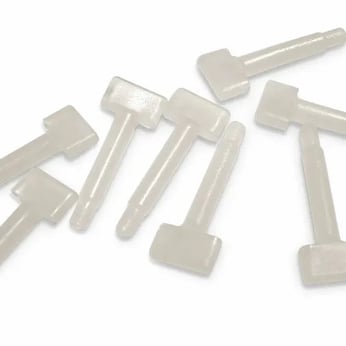
For holes with positioning studs smaller than the standard plug size, technicians can insert a smaller cap from the SC series into the main washer-style plug to reduce the internal diameter. This eliminates the need to manufacture a completely new mold for every different stud size and can significantly reduce masking-accessory inventory costs for production facilities.
Technical Criteria for Selecting Rubber Masking Plugs
Hole Diameter and Stud Diameter
The diameter of the positioning stud or thread at the masking location should be measured accurately before placing an order. For production batches involving multiple stud sizes, it may be more practical to use one base plug combined with an inner cap rather than ordering multiple dedicated molds.
Washer Thickness
Washer thickness directly affects how securely the plug sits against the workpiece surface. A washer that is too thin may bend or shift while coated parts are being suspended on the powder coating line, while an excessively thick washer can make installation difficult when holes are located close to one another.
Temperature Resistance
Temperature resistance is an essential criterion for powder coating applications because coated workpieces must pass through a high-temperature curing oven. The referenced washer-style plug series from Amit Michael Masking is specified with temperature resistance of up to 260°C, which is suitable for many standard powder coating curing cycles, typically operating around 180–220°C depending on the powder coating formulation.
For high-temperature applications, high temp masking plugs and high temperature masking plugs can be selected according to the actual curing temperature, exposure time, and material formulation.
Multiple-Use Capability
For production facilities where coated workpieces are continuously loaded and unloaded, masking plugs should have sufficient elasticity to withstand repeated installation and removal without tearing, becoming hardened, or losing their ability to maintain close contact with the surface after multiple usage cycles.
Compatibility with Round and Oval Holes
Not every positioning hole in a mechanical component is perfectly round. For oval holes resulting from machining tolerances or specific designs, a masking plug with a washer designed for both round and oval openings should be selected instead of forcing a standard round plug into an irregular opening, which may leave gaps around the edge.
Product Specifications and Practical Applications
Reference Specification Table
|
Specification |
Reference Value |
|
Maximum Temperature Resistance |
260°C |
|
Applicable Hole Shapes |
Round holes, oval holes |
|
Size Adjustment |
An additional small cap from the SC series can be inserted to reduce the internal diameter |
|
Main Function |
Simultaneously masks the positioning stud and hole edge; can also function as a drilled-hole masking plug |
|
Process Applications |
Wet painting and powder coating |
-
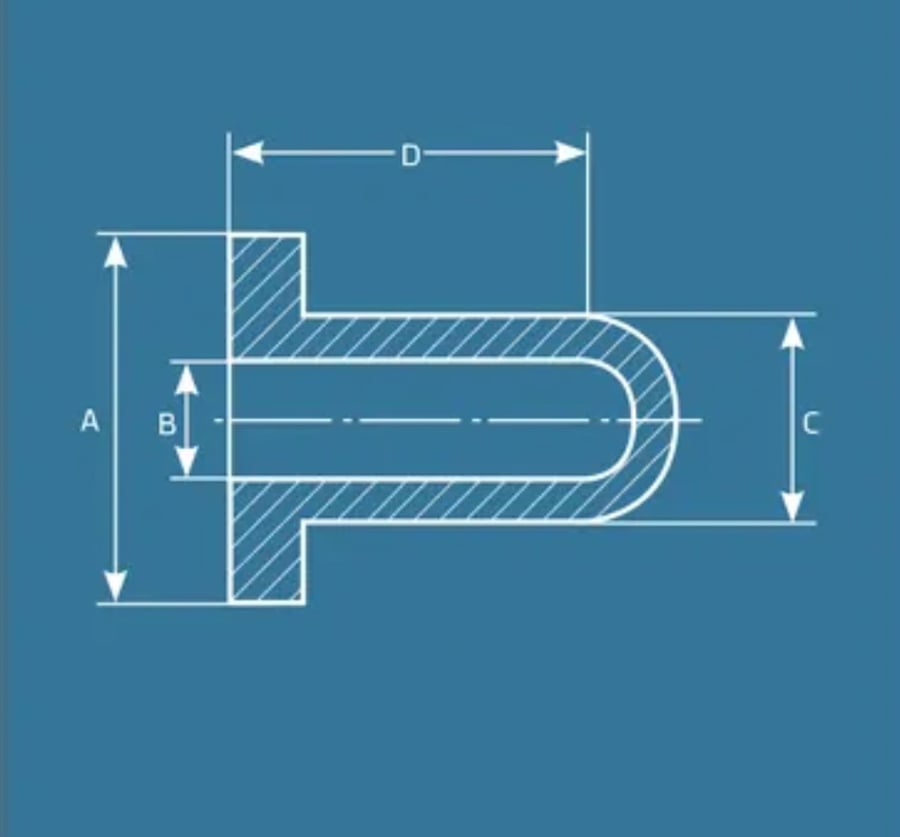
A – Outside diameter of the washer that contacts the workpiece surface
-
B – Inner hole diameter corresponding to the positioning stud or thread being masked
-
C – Outside diameter of the body/tube inserted through the hole
-
D – Overall plug length, measured from the washer surface to the tip
|
Product Code |
A – Washer Ø (mm) |
B – Inner Ø (mm) |
C – Body Ø (mm) |
D – Overall Length (mm) |
Packaging |
|
WC027-012 |
12.0 |
2.70 |
6.20 |
25.40 |
500 pieces/box |
|
WC035-015 |
15.0 |
3.48 |
6.60 |
25.40 |
500 pieces/box |
|
WC037-012 |
12.0 |
3.70 |
6.70 |
25.40 |
500 pieces/box |
|
WC046-015 |
15.0 |
4.60 |
8.20 |
25.40 |
500 pieces/box |
|
WC056-015 |
15.0 |
5.60 |
8.70 |
25.40 |
500 pieces/box |
|
WC075-018 |
18.0 |
7.50 |
10.0 |
25.40 |
250 pieces/box |
|
WC095-018 |
20.80 |
9.50 |
12.70 |
38.10 |
250 pieces/box |
|
WC115-025 |
25.0 |
11.50 |
16.70 |
38.10 |
250 pieces/box |
The entire washer-style plug series is specified with temperature resistance of up to 260°C, making it suitable for standard powder coating curing cycles.
Applications in Manufacturing
Washer-style rubber masking plugs are commonly used in the following applications:
-
Masking threaded holes and bolt holes on machine frames before powder coating.
-
Protecting positioning studs and flanges during electroplating to prevent plating solution from contacting the threads.
-
Temporarily sealing drilled holes during precision machining to prevent metal chips or coolant from entering the openings.
For coating applications that require silicone components, silicone paint plugs can be used to protect holes and other areas that need to remain free from paint or coating material. The exact design and material should be selected according to the process temperature and geometry of the workpiece.
Reference Pricing by Hole Diameter and Order Quantity
The processing price of rubber masking plugs depends mainly on three factors: hole/washer diameter, required washer thickness, and order quantity.
|
Diameter Group |
Order Quantity |
Pricing Notes |
|
Small diameter (under 10 mm) |
Under 1,000 pieces |
Higher unit cost because mold costs are distributed across a smaller quantity |
|
Medium diameter (10–30 mm) |
1,000–5,000 pieces |
Common pricing range, suitable for small and medium production orders |
|
Large diameter (over 30 mm) or oval holes |
Over 5,000 pieces |
More economical unit cost for large orders because mold costs are distributed across more products |
Because stud dimensions, hole sizes, and washer thicknesses vary between manufacturing facilities, customers should provide a technical drawing or physical sample so that the product can be measured and quoted according to the required specifications.
Suitable Users and Operating Conditions
Washer-style rubber masking plugs are suitable for the following customer groups:
-
Powder coating facilities: Require large quantities of masking components for parts with positioning studs and threaded holes before entering curing ovens, with materials that can withstand repeated production cycles.
-
Electroplating and zinc plating facilities: Require protection for threads and positioning surfaces from corrosive plating solutions.
-
Precision machining facilities: Require temporary protection for drilled holes or machined surfaces during intermediate production processes before final finishing.
Manufacturing Materials: Silicone, NBR, and EPDM Comparison
Material selection directly affects the service life and performance of rubber masking plugs in different operating environments.
|
Material |
Temperature Resistance |
Elasticity |
Estimated Reuse |
Suitable Environment |
|
Silicone |
Approximately -60°C to 260°C |
Very high, with good shape recovery after deformation |
Hundreds to thousands of cycles when properly maintained |
Powder coating, high-temperature environments, outdoor UV exposure |
|
NBR (Nitrile Rubber) |
Approximately -30°C to 100°C |
Moderate, with good oil and grease resistance |
Moderate, decreasing with frequent exposure to high temperatures |
Industrial oils, lubricants, and applications without high-temperature requirements |
|
EPDM |
Approximately -50°C to 150°C |
High, with good weather and polar chemical resistance |
High, with good ozone and sunlight resistance |
Outdoor environments, water, moisture, and water-based chemicals |
For powder coating applications with curing temperatures above 200°C, silicone is generally the preferred material among these three options because it can maintain its elasticity at elevated temperatures more effectively than NBR and EPDM. However, the actual temperature resistance should always be confirmed for the specific silicone formulation and process conditions.
When selecting masking plugs for anodizing, material compatibility should be evaluated based on the anodizing solution, operating temperature, exposure time, and the areas that need to remain uncoated. Silicone, EPDM, or other suitable materials may be considered depending on the specific chemical environment.
Important Considerations When Ordering Custom Rubber Masking Plugs
Minimum Order Quantity
Because each combination of hole diameter, washer thickness, and material hardness measured on the Shore A scale may require a dedicated compression mold, manufacturers commonly apply a minimum order quantity according to the required tooling investment. Customers should discuss their expected order quantity in advance to determine the most cost-effective initial mold solution.
Production Lead Time
For completely new designs requiring a mold to be manufactured from the beginning, production lead time will generally be longer than for orders using an existing mold from previous production runs. Early planning is recommended if the required masking plug specification has not been manufactured before.
Information to Prepare When Ordering
-
Diameter of the stud or hole to be masked, measured directly or provided in a CAD drawing.
-
Required washer diameter and washer thickness.
-
Material hardness (Shore A) and preferred material type: silicone, NBR, or EPDM.
-
Actual operating temperature of the process, such as powder coating, plating, or machining.
-
Required quantity and expected delivery schedule.
Quick FAQ About Custom Rubber Masking Plugs
How are washer-style rubber masking plugs different from conventional hole plugs?
A conventional hole plug only covers the inside of the hole, while a washer-style plug can simultaneously cover the positioning stud and the entire surface surrounding the hole opening during one installation. This helps reduce uneven coating or chemical buildup around the edge of the hole.
Can one plug be used for multiple stud sizes?
Yes. By inserting a smaller cap from the SC series into the main plug, the internal diameter can be reduced to accommodate different stud sizes without requiring a separate mold for every dimension.
Can rubber masking plugs be used for oval holes?
Yes. The referenced product series is designed for both round and oval holes, making it suitable for mechanical components where the hole geometry is not perfectly circular due to design or machining tolerances.
Which material is suitable for powder coating curing temperatures above 200°C?
Among the three common materials—silicone, NBR, and EPDM—silicone is generally the appropriate choice for higher-temperature powder coating applications. A reference temperature resistance of up to 260°C is specified for the product series described above, together with good shape recovery after repeated high-temperature cycles.
Washer-style rubber masking plugs are a practical masking solution for powder coating, plating, and precision machining facilities because they can protect both positioning studs and the surrounding hole edge in a single installation step. Selecting the correct material, diameter, and washer thickness according to the production process has a direct effect on the product's performance and service life.
Minh Fast – Custom Silicone Masking Plugs - Masking silicone washer cap
Minh Fast specializes in manufacturing custom rubber masking plugs for a wide range of production requirements. Products can be customized according to technical specifications, including:
-
Diameter, dimensions, and washer thickness according to customer requirements.
-
Material hardness suitable for each application.
-
Material options including Silicone, NBR, and EPDM.
-
Manufacturing based on samples, drawings, or customer-provided technical specifications.
With experience in manufacturing masking accessories for powder coating, plating, and precision machining applications, Minh Fast provides support in selecting suitable materials and product specifications from the beginning of the project. We accept orders ranging from prototypes and small production runs to large-volume manufacturing, with attention to technical requirements, consistent product quality, and delivery schedules.
See also:
- Flat Round Rubber Gasket, Heat-Resistant O-Ring – OEM Manufacturing
- Oil-Resistant and Heat-Resistant Rubber Cord Gasket – OEM O-Ring

Product Catalog
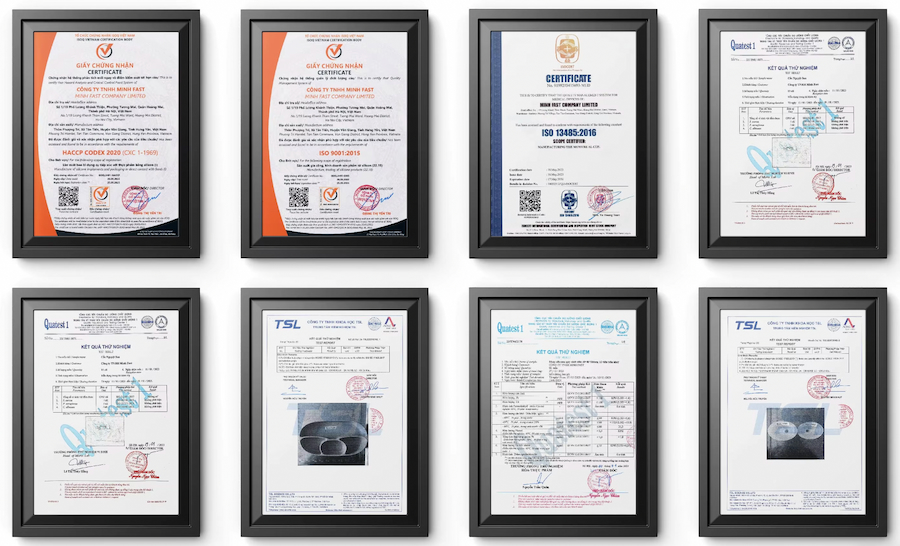
Certification
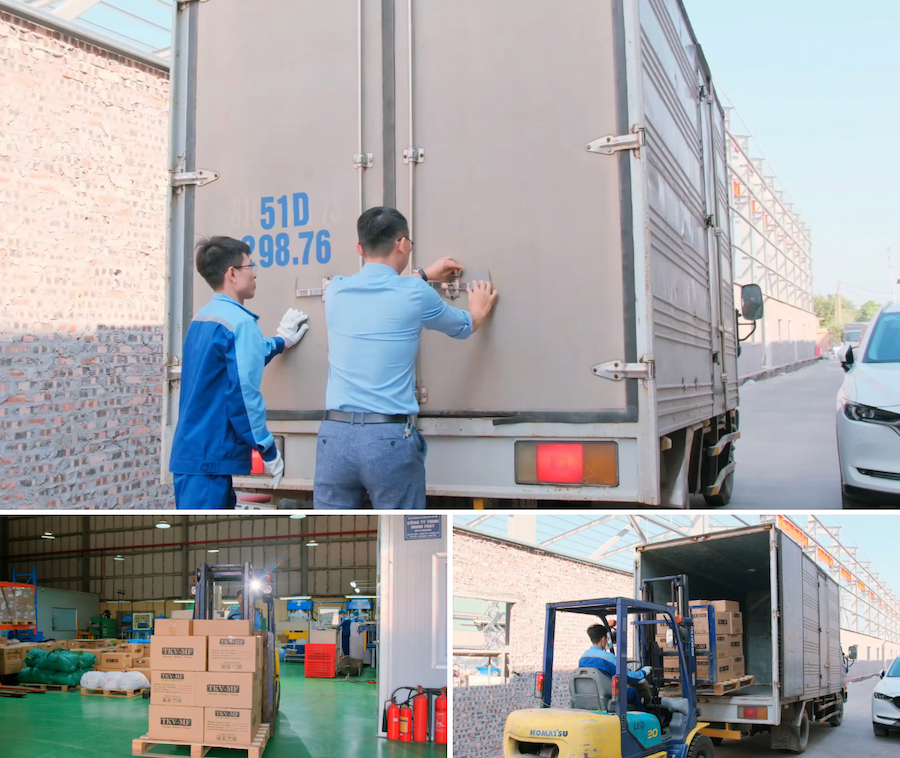
Packaging & Shipping

MINH FAST COMPANY LIMITED
Head Office: No. 1/19 Luong Khanh Thien Street, Tuong Mai Ward, Hanoi, Vietnam
Phone / Zalo / WhatsApp: +84 8899 14599
Email: Thamsiliconetkv@gmail.com | Minhfastsales@gmail.com
YouTube: Minh Fast Silicone Channel